
SUELLA BRAVERMAN: “HE LIED TO PARLIAMENT.”
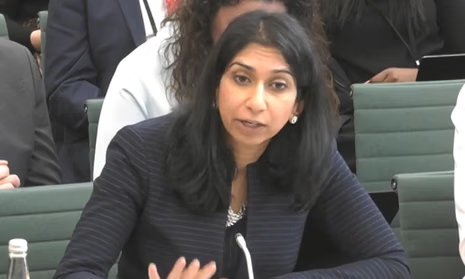
Suella Braverman’s accusation landed like a thunderclap, alleging the Prime Minister stood before Parliament and denied knowledge of a deal that documents may show he personally approved.

Attribution matters here, because this is not a verdict but a claim, yet the force of the language instantly reframed a routine political dispute into an existential test of trust.
At the despatch box, words are expected to be precise, because Parliament is built on the assumption that ministers speak with accuracy, even when their answers are uncomfortable.
If the claim is correct, critics argue the issue shifts from political spin toward the far more serious territory of misleading the legislature.
Braverman’s reference to a specific email is what electrifies the debate, because documents create timelines, and timelines either support truth or expose contradiction.
Supporters say emails rarely lie, and dates have a habit of undermining carefully crafted narratives once they are placed side by side.
The phrase “this isn’t just incompetence” is designed to provoke, because it escalates the allegation from human error into intentional wrongdoing.
That escalation forces the public to consider whether the standards applied to ordinary citizens should also apply to those occupying the highest offices.
National security is a charged term, and invoking it immediately widens the audience beyond party politics into the realm of collective safety and shared risk.
Even the suggestion that security decisions were shaped to appease backbenchers invites outrage, because it implies strategy was subordinated to short term survival.

Skeptics caution that such framing can oversimplify complex negotiations, warning audiences not to confuse internal compromise with deliberate endangerment.
Yet controversy thrives in that tension, where uncertainty feeds speculation and speculation fuels viral momentum.
The promise to release a timeline “tonight” adds urgency, transforming the story into a countdown rather than a retrospective argument.
Social media algorithms reward immediacy, and deadlines invite users to refresh feeds, debate theories, and position themselves ahead of potential revelation.
Dates are powerful because they anchor memory, allowing people to revisit speeches, interviews, and statements with a new lens of comparison.
If the date predates the Prime Minister’s denial, critics argue the credibility cost could be devastating, regardless of legal outcomes.

Defenders emphasize that context matters, suggesting authorization processes are often delegated, layered, and misunderstood even by those at the top.
They argue that political opponents frequently weaponize partial records to construct narratives that feel conclusive but remain incomplete.
What makes this moment combustible is not just the allegation, but the framing that resignation is inevitable, almost procedural, once the document is seen.
Predicting an outcome before evidence is examined can feel manipulative, yet it also primes audiences to interpret new information through expectation.
Online, supporters describe the claim as overdue accountability, a rare instance where power is challenged by paperwork rather than rhetoric.
Detractors describe it as trial by timeline, warning that public opinion can harden long before facts are independently verified.
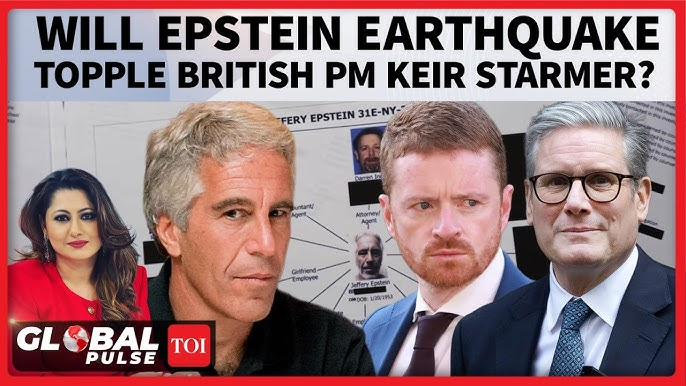
The weekend deadline intensifies everything, because compressed timelines reduce space for measured analysis and amplify emotional reactions.
Pressure accelerates decisions, and in politics, rapid judgment often replaces careful deliberation when reputations appear at stake.
This episode highlights a deeper anxiety about transparency, where citizens oscillate between demanding disclosure and doubting every disclosure they receive.
Trust becomes the real currency, and once depleted, even accurate explanations struggle to regain legitimacy.
Whether the email confirms or complicates the accusation, the impact on public discourse is already significant.
It demonstrates how a single document, paired with confident narration, can dominate conversation across platforms within hours.
For supporters, sharing the story feels like civic duty, a way to insist that statements to Parliament still matter.
For opponents, resisting the narrative feels equally urgent, a defense against what they see as performative outrage.
The truth, whatever it is, will likely be more complex than a headline allows, yet headlines are what travel fastest.
In the attention economy, nuance moves slowly, while certainty, even alleged certainty, spreads at extraordinary speed.
As the timeline emerges, audiences will not just be judging a Prime Minister, but testing their own instincts about power, proof, and persuasion.
That judgment may linger long after the weekend passes, shaping how future claims are received, shared, or dismissed.